Foundation & Waterproofing Glossary
We Are Foundation Repair.
We Are Waterproofing.
We Are USS.
Understanding foundation and waterproofing terminology can make it easier to recognize potential concerns around your home and better understand repair recommendations. This foundation repair glossary was created to explain common terms used throughout the foundation repair, waterproofing, and structural support industries. The following foundation terms and waterproofing terms are explained in straightforward language to help homeowners make more informed decisions.
French Drain. A French drain is a drainage system consisting of a gravel-filled trench and a perforated pipe designed to collect and redirect groundwater.
Sump Pump. A sump pump is a mechanical device installed inside a sump basin that collects excess water. When water reaches a certain level, the pump automatically removes it and discharges it away from the home.
Basement Waterproofing. Basement waterproofing refers to a variety of methods used to manage moisture and water intrusion in below-grade areas.
Crawl Space Encapsulation. Crawl space encapsulation involves sealing a crawl space with specialized liners and moisture-control materials. This process helps reduce humidity, limit moisture migration, prevent microbial growth, and improve the overall environment beneath the home.
Vapor Barrier. A vapor barrier is a moisture-resistant material installed over exposed soil or foundation surfaces within the crawl space. This lining helps reduce the movement of moisture vapor into crawl spaces and other enclosed areas.
Hydrostatic Pressure. Hydrostatic pressure develops when groundwater builds up in the soil surrounding a foundation. As water accumulates, saturated soils expand and push against basement walls and floors.
Foundation Settlement. Foundation settlement occurs when a structure moves downward because supporting soils or other foundation components shift, compress, or lose strength.
Foundation Crack. A foundation crack is a visible separation that forms in concrete, masonry, or other foundation materials. Cracks can develop for a variety of reasons, including settlement, soil movement, and structural stress.
Drain Tile. Drain tile is a drainage pipe system installed around a foundation to help collect groundwater. Despite its name, modern drain tile systems are usually made from perforated piping.
Interior Drainage System. An interior drainage system is installed along the inside perimeter of a basement or crawl space to help collect and redirect groundwater before it accumulates in the area.
Exterior Drainage System. An exterior drainage system is placed outside the foundation to intercept water before it reaches the foundation walls. These systems often include drainage pipes, gravel, and waterproofing materials.
Footing Drain. A footing drain is a drainage pipe installed near the base of a foundation footing. It collects groundwater and redirects it away from the home. Footing drains are frequently incorporated into foundation waterproofing strategies.
Concrete Leveling. Concrete leveling, also known as concrete lifting, is a process used to address sunken or uneven concrete surfaces. Specialized materials are placed beneath the slab to help raise affected sections closer to their intended position.
Slabjacking. Slabjacking is an older, more traditional concrete lifting method that involves injecting a heavy, cementitious slurry beneath a settled concrete slab. Slabjacking, also known as mudjacking, has since been replaced with more advanced techniques to effectively address concrete settlement.
Polyurethane Foam Injection. Polyfoam injection, also known as Polyjacking, is a modern, more popular concrete lifting method that involves injecting a lightweight, yet high-density, highly effective material beneath a settled concrete slab. This rapidly expanding, water resistant polyurethane foam fills voids beneath the concrete to help lift, level, stabilize, and provide support against further settlement.
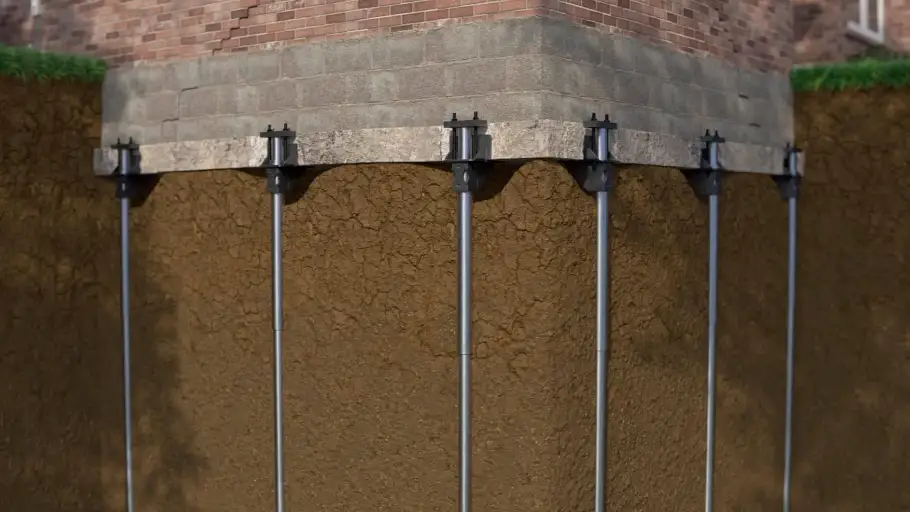
Push Pier. A push pier is a steel foundation support system driven deep into the ground beneath a structure. The pier transfers the weight of the home to stronger supporting soils or load-bearing strata.
Helical Pier. A helical pier is a steel foundation support system with screw-like plates attached to its shaft. The pier is advanced into the ground until it reaches suitable support conditions.
Carbon Fiber Straps. Carbon fiber straps are high-strength reinforcement materials applied directly to foundation walls and are used in a variety of commercial applications. They are designed to help resist additional inward movement and reinforce affected wall sections. Carbon fiber systems are often used when wall bowing is present.
Basement Wall Bowing. Basement wall bowing occurs when a wall begins leaning, curving, or moving inward. Excessive soil pressure, moisture conditions, and drainage problems can contribute to this issue.
Mold Treatment. Mold treatment is layman's term for microbial growth treatment, which focuses on removing mold, mildew, fungi, and other microbial growth found in crawl spaces through cleaning and treatment application. Preventative measures like encapsulation typically follow mold treatment.
Wood Rot. Wood rot is the deterioration of wood caused by prolonged moisture exposure. It commonly affects floor joists, beams, subfloors, and other structural components located in damp environments.
Still have questions about foundation movement, moisture concerns, or structural repairs? Reach out to United Structural Systems to speak with a member of our team.






See what customers have to say about working with USS.
Our customer reviews speak for themselves.